Installation guides
The risks of improper washing machine installation
Seven risks of a poorly installed washing machine, from leaks, vibration and electrical faults to a void warranty, plus a 6-step installation checklist.
4 min read
This browser is out of date, so the page may not display correctly. Please update your browser or open the page in a recent version of Google Chrome.
Skip to main contentInstallation guides
Installing an air conditioner takes more than mounting the unit and plugging it in. Poor workmanship means higher power bills, weak cooling, early failures and possibly a void manufacturer's warranty.
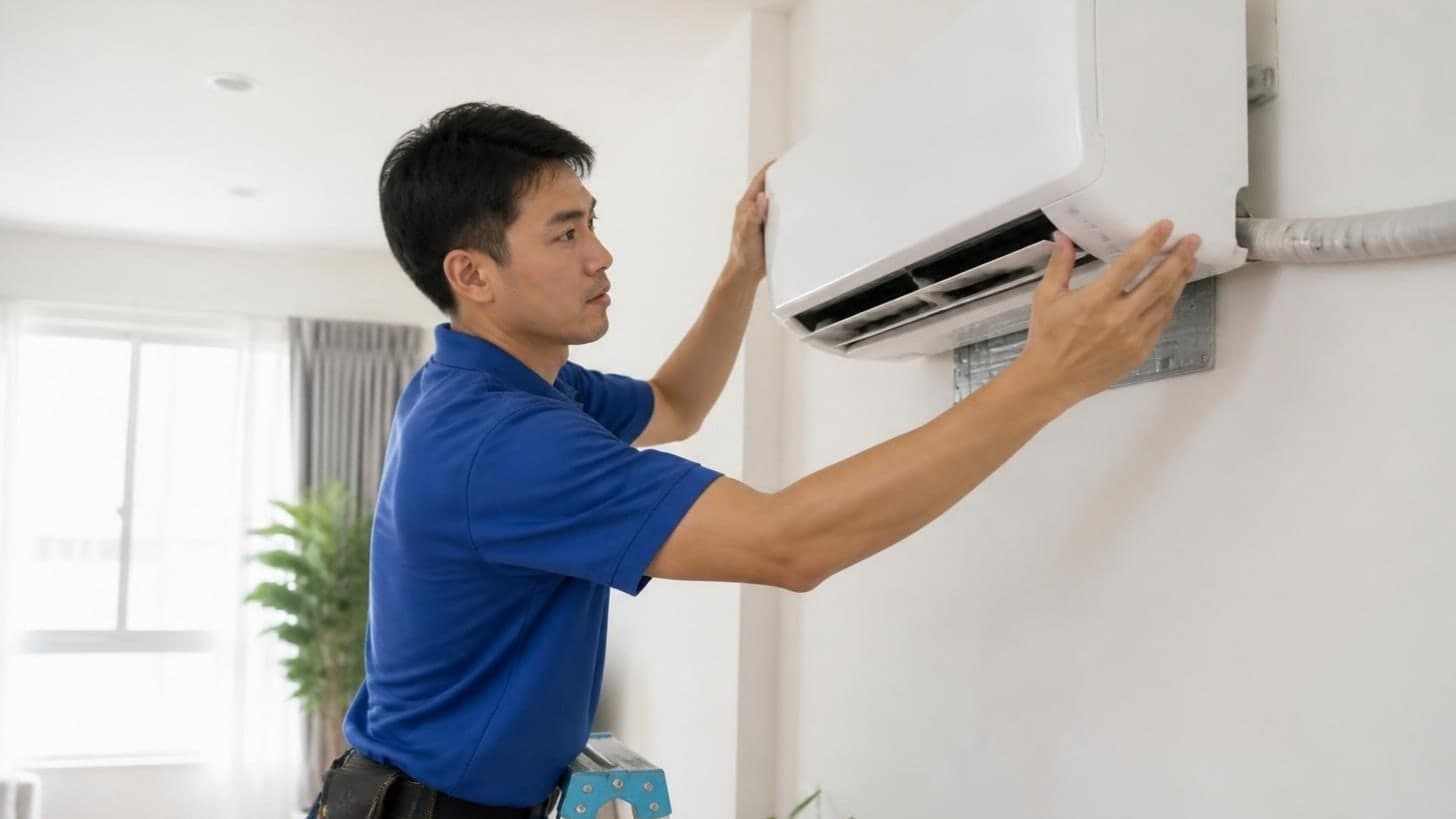 Illustrative image
A poorly installed air conditioner can use more power, cool weakly, wear out quickly and even lose the manufacturer's warranty. Below are the key practices that help you get the installation right from day one.
Where you install the unit directly affects cooling performance and service life.
Indoor unit
Outdoor unit
The copper piping is the lifeline of the whole system.
Keep in mind
Tip:Correctly routed piping helps the unit cool faster and use less power.
This step is critical, yet many installers skip it to save time.
Vacuuming the lines
Watch out:Without a vacuum, the unit can lose efficiency and fail within 6–12 months.
An air conditioner draws a lot of power, so it needs its own circuit.
Make sure there is
This prevents short circuits and fires and protects the equipment over the long term.
A badly fitted drain line causes problems that are hard to live with.
Common consequences
Keep in mind
After installation, run a full check before you pay.
Check whether
Tip:Do not pay until the full test run is done.
However good the unit, a poor installation will still cause faults.
A professional installer will
This choice shapes most of your experience with the air conditioner.
Bluebolt Services installs air conditioners following a standard procedure:
Seven risks of a poorly installed washing machine, from leaks, vibration and electrical faults to a void warranty, plus a 6-step installation checklist.
4 min read
 Illustrative image
An AC that runs but will not cool may have dirty filters, low refrigerant, a weak capacitor or a poor install. Ten common causes and how to fix them.
3 min read

Robot vacuums, sensor lighting, AI cameras and smart homes: the core technology, the benefits, the set-up challenges and where home automation is heading.
3 min read
For businesses
Bluebolt Services takes air conditioner and appliance installation and maintenance jobs from brands, online marketplaces and retail chains. If you need help after an installation, see our customer support page.